Don t Quit Retro Checker Bold SVG Review
As a designer who spends half my life staring at stitch maps and the other half trying to sell finished goods, I don’t just look at an embroidery design; I look at its potential. When Don t Quit Retro Checker Bold SVG landed in my queue, I didn’t just see text. I saw a mood. I saw a product that could easily become a bestseller on Etsy or a standout item at a local craft fair. But before you toss it into your hoop, let’s talk about what this actually looks like when thread meets fabric.
The First Impression: Boldness Meets Nostalgia
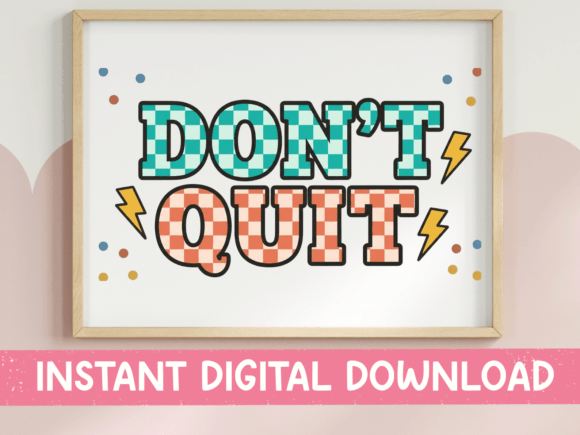
The moment you open the file, the energy is undeniable. This isn’t a delicate script font meant for a wedding invitation. This is oversized block lettering with a heavy, assertive presence. The retro checkerboard pattern filling those letters immediately signals a specific aesthetic: 70s-inspired, gym-bro culture, vintage athletic wear, or perhaps a bold statement piece for a teenager’s room. It creates a visual personality that is confident, slightly rebellious, and undeniably loud.
For an embroidery designer, the challenge with designs like Don t Quit Retro Checker Bold SVG is always balance. Does the checkerboard pattern get lost in the stitching? Does the text remain legible? From a graphic design standpoint, the layout works because the negative space between the blocks allows the eye to rest, even when the pattern is dense. It feels like a design built for impact rather than subtlety. That makes it perfect for custom apparel where you want the message to be read from across the room.
Real-World Application: Where This Design Shines
I recently had a client ask for a motivational piece for her husband’s new home gym setup. She wanted something masculine but not aggressive. I pulled up Don t Quit Retro Checker Bold SVG. Here is why it worked:
- Sweatshirt Embroidery: The thick block letters hold up beautifully on fleece or heavy cotton blends. The texture of the fabric complements the retro vibe, making the checkerboard pattern pop without looking too flat.
- Tote Bag Designs: Canvas is a natural home for this kind of graphic. When stitched onto a sturdy tote bag, the design becomes a badge of honor for gym-goers and goal-chasers. It turns a simple accessory into a statement piece.
- Embroidered Patches: Because the design is self-contained and bold, it translates perfectly into a patch format. These are huge right now for adding character to denim jackets, backpacks, or baseball caps. The checkerboard border naturally lends itself to a clean edge when appliquéd or tightly stitched.
- Holiday Gifts: Think about the recipient. Who needs a push mid-slump? Often, it’s someone starting a New Year’s resolution or returning to work after a break. A personalized gift featuring this design hits the emotional mark of encouragement without being cheesy.
This isn’t just a t-shirt design; it’s a versatile graphic asset. Whether you are selling digital embroidery files or physical handmade products, the appeal crosses demographics. It appeals to the hobbyist crafter who wants to make a gift for their fitness-obsessed friend, and it appeals to the small business owner looking for high-margin merchandise.
Technical Considerations: The Reality of Stitching
Here is where we need to get practical. Not every design stitches out as cleanly as it looks on screen. With Don t Quit Retro Checker Bold SVG, there are specific areas where you need to pay attention.
Stitch Density and Fabric Texture: The checkerboard pattern implies a fill stitch area. If your stabilizer is weak or your tension is off, you will see pucker. Always test on scrap fabric first. If you are stitching this onto a thin fabric or stretchy knit, you must use a cut-away stabilizer to prevent distortion. The weight of the thread used for the checkerboard can pull the fabric if not supported properly.
Thread Color Contrast: The retro vibe relies on contrast. If you are stitching this on dark fabric, light thread colors are essential. However, be careful with very light threads on dark backgrounds; they can sometimes show through or require multiple passes, which increases your stitch count and production time. Conversely, dark thread on light fabric offers crisp clarity. I recommend testing black and white mockups early to ensure the checkerboard pattern remains distinct and doesn’t blur into a gray mess.
Small Details and Corners: While the letters are large, the edges of the checkerboard squares are tiny details. In a small hoop size, these might get lost or look jagged. If you are planning to sell these as boutique branding items, ensure your machine can handle the precision required for the inner corners of the checkers. Satin stitch borders around the text can help define the shape and protect the fill stitch from fraying or shifting.
Where to Use Carefully
There are certain scenarios where Don t Quit Retro Checker Bold SVG might struggle. Avoid placing this on curved surfaces like fitted caps unless you have extensive experience with cap hoops and stabilization. The rigidity of the block letters fights against the curve of a hat brim. Similarly, avoid this design on baby clothes if you are aiming for a soft, gentle aesthetic. The boldness of the graphic is too harsh for nursery decor or infant garments. It belongs on durable, adult-oriented items like aprons, kitchen towels, or heavy-duty bags.
Also, consider the end-user. If you are designing for frequent washing, ensure your thread quality is top-tier. High-density fill stitches can wear down faster than running stitch accents. For commercial embroidery projects intended for long-term use, invest in premium polyester threads that resist fading and abrasion.
Final Verdict for the Creative Entrepreneur
Does Don t Quit Retro Checker Bold SVG add value to your shop? Absolutely. It taps into a timeless theme—perseverance—and packages it in a visually striking, trendy format. It is not just another quote design; it is a graphic statement.
For the Etsy seller, this design offers high perceived value. Customers are willing to pay more for designs that look professionally executed and emotionally resonant. For the hobbyist, it is a fun project that yields a satisfying result. Just remember to respect the technical limits. Check your hoop size, confirm your licensing terms before selling finished items, and never skip the test stitch.
If you are looking to expand your range of design assets or add a punchy addition to your craft business inventory, this is a smart choice. It bridges the gap between casual motivation and serious style. When done right, the finished product doesn’t just say "don't quit"; it embodies it. And that is the kind of energy that sells.