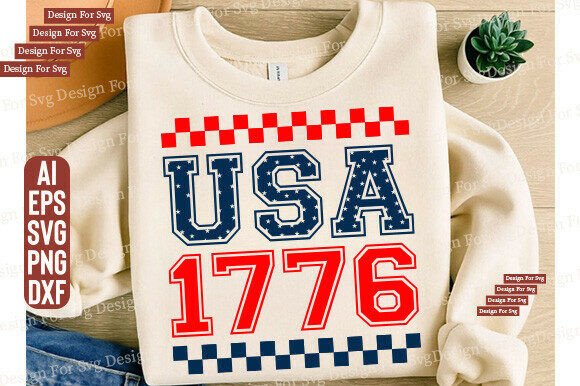
Retro USA 1776 SVG Review
As a designer who spends more time than I care to admit staring at stitch charts and testing thread tension, I have learned that the difference between a "cute" digital file and a professional finished product often comes down to one thing: how well the design translates from screen to fabric. When I first pulled up the Retro USA 1776 SVG, 4th of July Design, my initial reaction was less about the patriotic theme—which is ubiquitous this time of year—and more about its structural integrity and visual weight. This isn't just another clipart image slapped onto a t-shirt; it has a distinct personality that demands careful consideration before it hits the hoop.
The immediate impression of this T-Shirt Designs category graphic is one of nostalgic confidence. The retro aesthetic suggests a vintage Americana vibe, which immediately signals to me that this piece belongs in the realm of custom apparel rather than delicate heirloom work. It feels bold, slightly distressed, and ready for heavy-duty use. For those of us running a craft business or managing an Etsy seller storefront, understanding this mood is critical. You aren't just selling a flag; you are selling a feeling of timeless, rugged patriotism. This design doesn't whisper; it speaks clearly to customers looking for statement pieces for their summer wardrobes or home decor.
Real-World Application: The Capsule Wardrobe Test
To truly evaluate any embroidery project, I prefer to visualize it on specific garments before even opening the software. Let’s imagine we are preparing a batch of merchandise for a local craft fair or a seasonal drop on a handmade shop. Where does the Retro USA 1776 SVG, 4th of July Design fit best?
First, consider the classic unisex t-shirt. This design thrives on cotton blends. The retro style pairs perfectly with heather grey or navy blue fabrics, where the contrast allows the design elements to pop without overwhelming the wearer. However, the real test for any machine embroidery design is how it handles texture. If I were to place this on a thick fleece sweatshirt, the design’s lines need to be robust enough to stand out against the nap of the fabric. Based on the visual complexity of this Graphics asset, it appears to have enough definition to hold its own on medium-weight fabrics, but it might get lost in the pile of a high-pile sherpa jacket.
Another strong candidate for this design is the embroidered patch. Many small business owners love creating detachable patches for denim jackets or canvas tote bags. The self-contained nature of many retro designs makes them ideal for this application. If executed correctly with a proper satin stitch border, this could become a staple item for your small shop product lineup. It adds value because it can be moved, gifted, or displayed independently of the garment.
Technical Considerations for Stitching Success
While the artistic vision is clear, the practical execution requires scrutiny. Not all digital embroidery files are created equal, and as a reviewer, I must highlight the areas where attention to detail is non-negotiable. The primary concern with any design featuring text or intricate geometric shapes, such as the stars and stripes implied by this title, is the stitch density.
If the fill stitch areas are too dense, the fabric will pucker, ruining the drape of the garment. Conversely, if they are too sparse, the underlying fabric may show through, making the finished product look cheap. Before committing to a large production run, you must inspect the vector paths closely. Look for overlapping nodes that could cause machine errors. Additionally, check the thread colors. A retro design often relies on muted tones or specific contrasts. Ensure that your thread palette matches the intended vintage look. Using bright, neon polyester threads might clash with the nostalgic mood, whereas matte rayon or cotton-wrapped polyester would enhance the authentic feel.
Furthermore, consider the hoop size. If this design is being scaled up significantly for a sweatshirt chest print, ensure that your machine can handle the dimensions without requiring re-hooping, which can misalign the stitching. For smaller applications, like a baby onesie or a tea towel, verify that the smallest details remain legible. Tiny stars or thin lines can disappear if the scale is too small, leading to customer dissatisfaction and returns.
Where Caution Is Required
There are specific scenarios where this design should be used carefully. Avoid placing intricate versions of this embroidery file on highly textured fabrics like burlap or loose-weave linen unless you are using a heavy stabilizer. The needle penetration required for the design could distort the fabric structure. Similarly, be wary of stretchy knits. While t-shirts are common, extremely stretchy athletic wear can cause the satin stitch edges to break or skip stitches during movement.
Also, think about the end-user experience. If this is a personalized gift for a holiday occasion, durability matters. Frequent washing can degrade poorly stitched areas. Ensuring that underlay stitches are sufficient to stabilize the base fabric will extend the life of the handmade product. Customers expect longevity, especially when purchasing from boutique brands.
Visual Appeal and Brand Consistency
From a branding perspective, the Retro USA 1776 SVG, 4th of July Design offers excellent versatility. Its clean lines and thematic clarity make it suitable for various marketing materials. You can use it in printable mockups to showcase potential products on social media, helping to drive engagement before you even cut the thread. The retro aesthetic appeals to a broad demographic, from Gen Z consumers who appreciate vintage styles to older generations who resonate with traditional symbolism.
This design also supports brand consistency. If your shop focuses on Americana, rustic themes, or patriotic pride, this asset aligns seamlessly with that identity. It helps create a cohesive collection, whether you are offering holiday embroidery items, wedding gifts for military couples, or everyday commercial embroidery goods. The visual personality of the design reinforces trust; it looks intentional and professional, not rushed or generic.
Final Designer Notes
Before integrating this into your workflow, I strongly advise conducting a full test run. Stitch the design on scrap fabric that mimics the final material. Check the stabilizer choice—cut-away stabilizers are generally recommended for woven shirts to prevent distortion, while tear-away might suffice for temporary projects. Inspect the corners and curves for smoothness. If you notice any jagged edges, you may need to adjust the digitization settings or simplify the design slightly.
Finally, always confirm the licensing terms. As a digital product, usage rights vary. Ensure you are permitted to sell finished items made from this design, particularly if you are operating a craft business at scale. Respecting intellectual property protects your reputation and keeps your design assets legally sound.
In conclusion, the Retro USA 1776 SVG, 4th of July Design is a strong contender for designers looking to add patriotic flair to their collections. With careful attention to fabric selection, stitch quality, and finishing techniques, it can transform into a high-quality embroidered patch or stunning tote bag design. It captures the spirit of the season while maintaining the professional polish that discerning buyers expect. Treat it with respect, test it thoroughly, and it will serve your creative projects well.